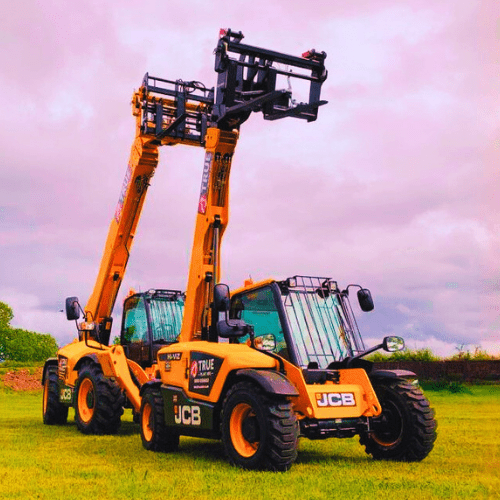


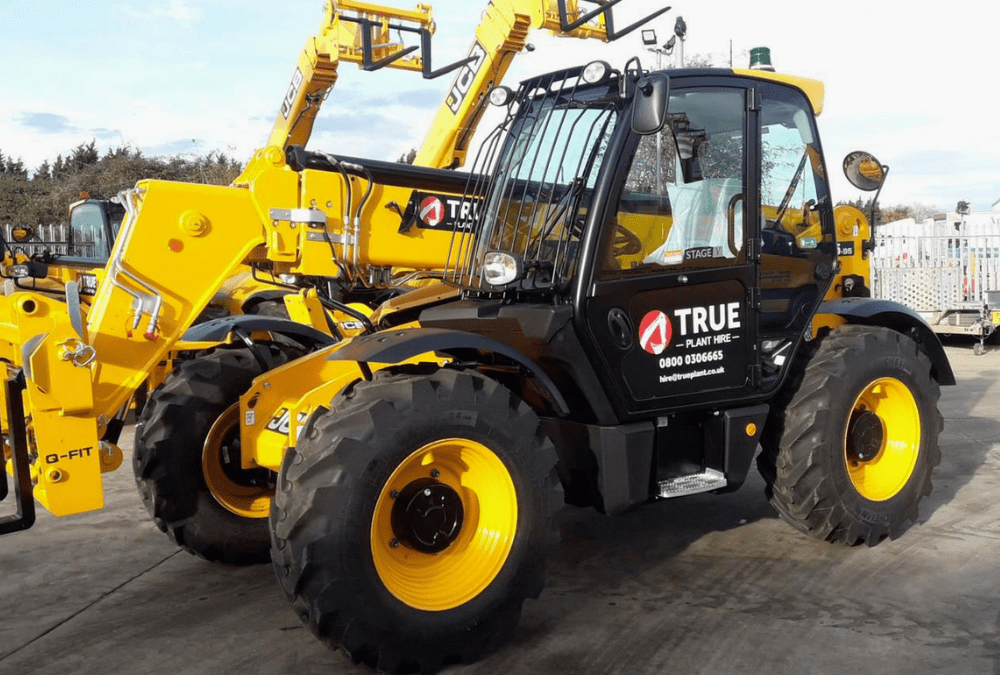
When it comes to lifting, moving, and placing materials safely and efficiently on-site, few machines can match the sheer versatility of the telehandler.
Whether you’re managing a busy construction project, an agricultural operation, an industrial site, or a large-scale commercial development, telehandlers provide the reach, lifting capacity, and flexibility needed to keep your operations running smoothly.
At True Hire, we supply a range of top-tier telehandlers to meet the demands of projects of all sizes. In this guide, we’ll break down exactly what telehandlers are, their most common uses, the sizes available, and the key benefits they bring to the modern worksite.
What Is a Telehandler?
A telehandler, short for telescopic handler, is a dual-purpose lifting machine that essentially combines the lifting functionality of a forklift with the reach and height of a crane.
The standout feature is its telescopic boom, which extends forwards and upwards. This allows operators to lift heavy loads and place them precisely into tight, high, or awkward locations that traditional forklifts simply can’t access.
Even better, telehandlers are multi-tool workhorses. They can be quickly fitted with a variety of attachments to suit the job at hand, including: forks, buckets and sweepers, lifting jibs and crane hooks, winches, material skips, and block grabs. This rapid adaptability makes them one of the most valuable and highly utilised pieces of equipment on any site.
Common Uses for Telehandlers
Construction Projects
Telehandlers are the backbone of the construction industry, used to move heavy materials across sites quickly and safely. Typical tasks include, lifting pallets of bricks, blocks, and mortar, moving heavy timber packings and structural steel, positioning roofing materials directly onto upper floors, loading and unloading delivery lorries, and transporting materials across rough, unmade ground.
By placing materials exactly where they are needed, telehandlers significantly reduce manual handling and keep project momentum high.
Agricultural Applications
On a busy farm, a telehandler is a non-negotiable asset. They are commonly used for moving and stacking hay and straw bales, loading feed and handling bulk fertilisers, mucking out and cleaning livestock facilities, and loading trailers, grain bins, and lorries. Their rugged build and excellent traction make them ideal for handling daily farming chores across fields and yards.
Industrial and Commercial Sites
Telehandlers also play a vital role in large-scale warehousing, recycling facilities, timber yards, and distribution centres, especially in outdoor environments where heavy lifting and high-reach material movement are required daily.
Understanding Telehandler Sizes
Choosing the right telehandler comes down to balancing two critical factors: Lift Height and Lift Capacity.
Lift Height (The reach you need)
This dictates how high the machine can safely extend its boom. Common sizes include:
4m–7m: Compact models perfect for smaller sites, tight yards, and confined spaces.
9m–13m: The industry sweet spot for general construction projects and single-to-two-storey builds.
14m–18m: High-reach machines built for larger developments, housing estates, and commercial builds.
20m+: Specialist models designed for exceptional reach on major infrastructure projects.
Lift Capacity (The weight you need to move)
This is the maximum weight the machine can safely handle. Standard capacities usually range across:
2.5 tonne models
3 to 4 tonne models
6 to 9 tonne heavy-duty models
Specialist high-capacity units
Why getting it right matters: Selecting the correct machine is crucial for both safety and site efficiency. Hiring a machine with insufficient reach or capacity can bring a project to a standstill, while overspecifying equipment can inflate your budget unnecessarily.
The Benefits of Hiring a Telehandler
Boosted Site Productivity: Telehandlers move materials rapidly across site layouts and place them exactly where they’re needed. This keeps tradespeople working, reduces downtime, and keeps your project firmly on schedule.
Exceptional Versatility: Because one machine can swap from forks to a bucket or a lifting hook in minutes, a telehandler often eliminates the need to hire multiple, single-purpose machines. This saves you both money and valuable site space.
Improved On-Site Safety: Modern telehandlers are engineered with safety at the forefront. They feature excellent operator visibility, built-in load management systems, stability monitoring, and advanced cabin controls. By taking care of the heavy lifting, they drastically reduce the risks associated with manual handling.
Built for Rough Terrain: Active construction sites are rarely flat or paved. Telehandlers feature robust four-wheel drive systems and high ground clearance, meaning they can navigate deep mud, uneven tracks, and challenging slopes where a standard forklift would get stuck.
A Smarter Financial Choice: Hiring your plant allows you to access the latest, most reliable machinery without the heavy upfront capital investment of purchasing. Plus, plant hire means you never have to worry about maintenance, storage, lifting certificates (LOLER), servicing, or depreciation.
Choosing the Right Telehandler: A Quick Checklist
Before booking your hire, it’s worth mapping out:
- The maximum height you need to reach.
- The heaviest weight you need to lift at that height.
- Any tight access points or height restrictions on site.
- The ground conditions (e.g., hardstanding vs. deep mud).
- Which attachments will make the job easiest.
A quick chat with our hire team can save you time and ensure you get the safest, most efficient machine for the job.
Ready to Get Moving?
Whether you’re breaking ground on a new housing development, managing a commercial build, or looking for dependable seasonal support on the farm, True Hire is here to keep your project moving forward.
Contact True Hire today to discuss your lifting requirements, get a quick quote, and find out why businesses across the Midlands trust us for reliable plant hire solutions.